

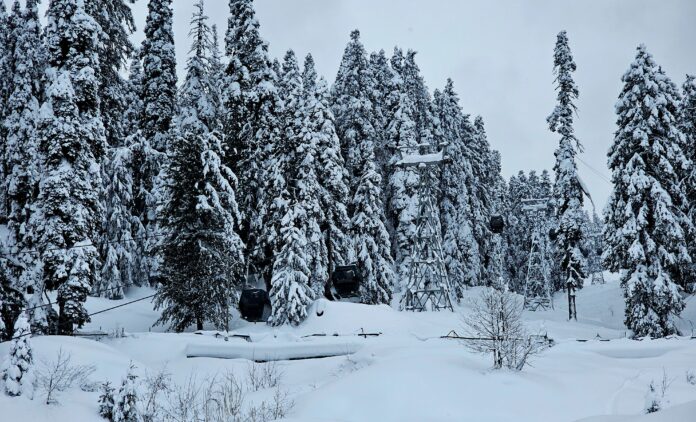
As the 40-day intense winter phase known as Chillai Kalan concluded on Friday, night temperatures rose across various parts of the Kashmir Valley, offering reprieve from the harsh cold, according to meteorological officials.
This annual period, which began on December 21, is known for its severe cold and frequent snowfall. With its end, Kashmir enters the shorter 20-day phase known as Chillai Khurd, followed by the 10-day Chillai Bachha.
Srinagar, the summer capital, recorded a significant rise in minimum temperature, settling at 1.3 degrees Celsius, a notable increase from the previous night’s -0.6 degrees Celsius. This temperature also exceeded the seasonal average by 2.2 degrees.
Other areas showed similar trends, with Konibal recording 1.0 degrees Celsius, Pulwama at 0.1 degrees Celsius, and Kulgam at 1.1 degrees Celsius. Most weather stations across the Valley reported above-normal minimum temperatures for this time of year.
However, not all areas enjoyed moderate temperatures. Higher altitude regions continued to experience biting cold. Sonamarg in Ganderbal district remained the coldest place in Jammu and Kashmir, recording a minimum temperature of -10.6 degrees Celsius, only slightly higher than the previous night’s -11.2 degrees Celsius. Other notable readings include -9 degrees Celsius in Gulmarg and -5.3 degrees Celsius in Pahalgam.
When examining temperatures from various stations, Qazigund recorded -0.3 degrees Celsius, Kokernag -0.6 degrees Celsius, and Kupwara at -3.1 degrees Celsius.
Chillai Kalan is traditionally viewed as the coldest period of winter in Kashmir and often leads to significant snowfall, particularly in higher elevations. The end of this frigid phase introduces the Valley to warmer spells.
According to the Meteorological Department, a fresh western disturbance is set to impact the region starting Sunday, which could potentially bring another round of wet weather, influencing temperatures once again.