

The Congress party is attacking Prime Minister Narendra Modi, labeling him a ‘weak PM’ after the recent announcement by the US to impose a $100,000 annual fee for H-1B visas. This change, which disproportionately affects Indian skilled workers, has led to significant backlash from Indian political leaders, particularly with a focus on national interests and foreign policy.
Congress Critiques Modi’s Leadership Amid H-1B Visa Changes
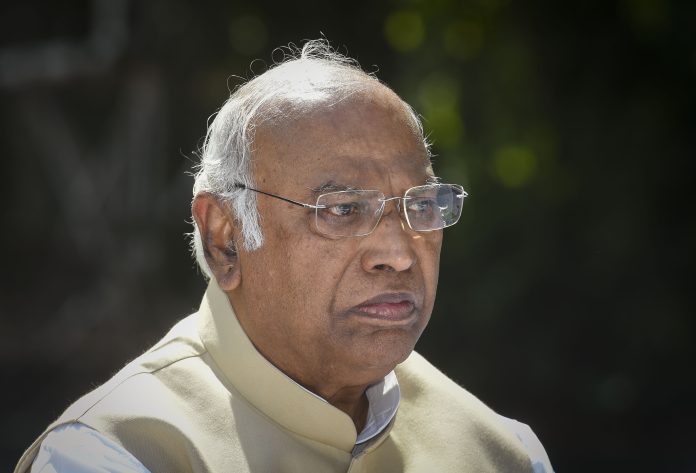
On Saturday, Congress president Mallikarjun Kharge stated that Modi’s penchant for ‘strategic silence’ and prioritizing ‘loud optics’ has been detrimental to India’s standing. He emphasized that foreign policy should prioritize India’s needs rather than merely hosting events.
Impact of H-1B Visa Fee on Indian Workers
The leader of the opposition in the Lok Sabha, Rahul Gandhi, raised a significant alarm regarding the new visa policy changes, tweeting, ‘I repeat, India has a weak PM.’ The hike in H-1B visa fees is expected to severely hit Indian tech workers, as approximately 70% of H-1B visa holders in the US are Indian nationals.
According to Kharge, India stands to face a potential loss of ₹2.17 lakh crore across various sectors due to this increase. He reiterated that the provisions of the HIRE Act are explicitly targeting Indian outsourcing, calling the fees a hindrance to India’s strategic interests.
Congress Leaders Call for Reassessment of Modi’s Foreign Policy
Kharge also pointed out inaccuracies in Modi’s approach to international relations. He claimed, ‘Bear hugs, hollow slogans, concerts, and getting people to chant “Modi, Modi” is not foreign policy!’ This statement highlights a growing concern among opposition leaders about the effectiveness of Modi’s strategy.
In a post on social media, Congress deputy leader Gaurav Gogoi echoed similar sentiments, stating that the consequences of the H-1B decision greatly affect the best and brightest minds in India. He drew comparisons to former Prime Minister Manmohan Singh’s response to an insult aimed at an Indian diplomat, suggesting that Modi lacks the same vigor in defending Indian interests.
Long-Term Consequences of New Visa Fees
With Trump’s administration aiming to reinforce immigration control, the changes to the H-1B visa program are framed as necessary for national security. Trump stated, ‘The H-1B programme has been exploited to the detriment of American workers.’ However, this has raised concerns among many regarding its impact on India and its skilled labor force.
Congress leader Pawan Khera noted in a tweet, ‘Eight years later, Rahul Gandhi is vindicated yet again.’ He referred to Gandhi’s early warnings about the potential pitfalls of Modi’s relationship with the Trump administration back in 2017. Khera’s remarks reinforce the view that Modi’s foreign policy may be misaligned with India’s needs.
Conclusion: A Call for Stronger Leadership
The ongoing debate over the H-1B visa changes signals a critical juncture for India’s foreign policy. Congress leaders believe Modi must recalibrate his approach to safeguard national interests. As proposed fee hikes raise alarms among professionals and industry leaders, the call for stronger leadership from Modi is resonating across political lines.
In a rapidly changing global landscape, Modi’s critics urge a shift from superficial displays of diplomacy to substantial political engagement that prioritizes India’s strategic goals, particularly regarding immigration and international labor movements.