

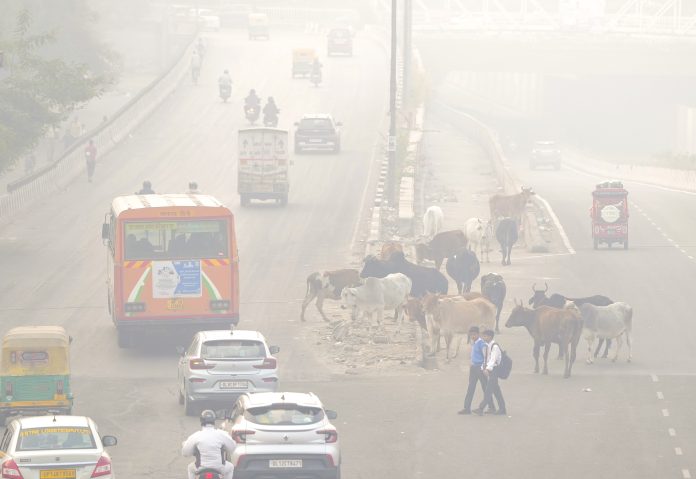
Delhi, the capital of India, remains engulfed in toxic air as it grapples with a troubling Air Quality Index (AQI) reading of 360 on Saturday morning. According to the Central Pollution Control Board (CPCB), this level of contamination places the city firmly in the ‘very poor’ category, raising alarms among health experts.
As defined by the CPCB, an AQI ranging from 301 to 400 falls into the ‘very poor’ bracket, while a score of 401 and above is deemed ‘severe’. Thus, the capital’s current air quality poses serious health risks, particularly for vulnerable groups including children, the elderly, and those with pre-existing health conditions.
In addition to alarming pollution levels, Delhi recorded a minimum temperature of 11.8°C, as reported by the India Meteorological Department (IMD). This chilling weather coupled with high pollution adds a layer of discomfort for residents.
The IMD forecasts persistent fog and low visibility challenges across the city. The maximum temperature is expected to rise to around 28.2°C. However, despite the warmth anticipated in the afternoon, the overall environment will remain oppressive due to high humidity, which was noted at a staggering 100 percent at 8:30 a.m.
This extreme humidity exacerbates the air quality issues, as moisture can trap pollutants closer to the surface. Environmentalists have long warned that without effective measures, the problem will only worsen.
Health professionals urge residents to minimize outdoor activities and wear masks if necessary. Dr. Aman Verma, an environmental health expert, stated, “The very poor air quality directly impacts respiratory problems and increases hospitalization rates. Immediate actions are necessary to mitigate this crisis.”
The residents in multiple districts have reported an increase in respiratory ailments. Experts advise that especially those with pre-existing conditions should stay indoors as much as possible until air quality improves.
Meanwhile, authorities are ramping up measures aimed at combating escalating pollution levels. Officials are enforcing strict regulations on construction activities, vehicular emissions, and open burning to help alleviate the dire air quality.
As the global spotlight intensifies on climate change and urban pollution, Delhi’s experiences serve as a significant example of the urgent need for sustainable urban policies and swift action from authorities. Public awareness campaigns might also play a vital role in educating citizens about reducing emissions in their daily lives.