

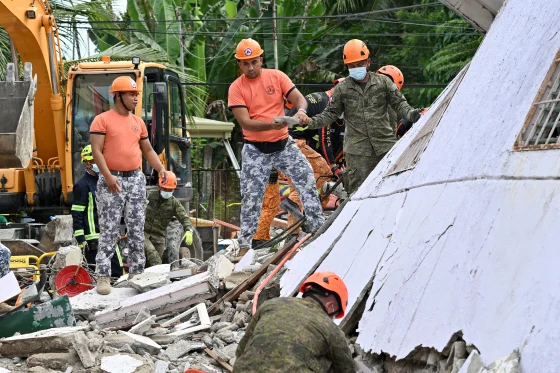
An offshore earthquake with a preliminary magnitude of 7.6 struck off the coast of Davao Oriental, a southern province of the Philippines, on Friday morning. The quake triggered warnings of a potential hazardous tsunami in nearby regions.
The Philippine Institute of Volcanology and Seismology (PHIVOLCS) reported that the earthquake resulted from shallow fault movement at a depth of 10 kilometres. Its epicentre was located approximately 62 kilometres southeast of Manay town, alarming local authorities regarding possible damage and strong aftershocks in the aftermath.
The Pacific Tsunami Warning Center in Honolulu issued a caution that hazardous waves might occur within 300 kilometres of the epicentre. Some coastal areas of the Philippines could witness waves rising up to 3 metres above normal tide levels. It also advised that smaller tsunami waves could affect regions in Indonesia and Palau.
In recent weeks, the Philippines has grappled with the aftermath of a magnitude 6.9 earthquake on September 30, which tragically claimed 74 lives and displaced thousands, particularly impacting areas in the central province of Cebu, including Bogo city and its neighbouring towns.
The Philippines, known for its susceptibility to natural disasters, lies within the Pacific “Ring of Fire”. This seismic zone experiences frequent earthquakes and volcanic activities, coupled with the archipelago’s vulnerability to nearly 20 typhoons and storms annually. Such factors make it crucial for both governmental bodies and volunteer organizations to prioritize disaster preparedness and response.
Following the seismic event, authorities have strongly urged coastal residents to remain vigilant and observe evacuation protocols until the tsunami threat dissipates. The Philippine government remains alert, ready to deploy resources to ensure public safety as the situation develops.