

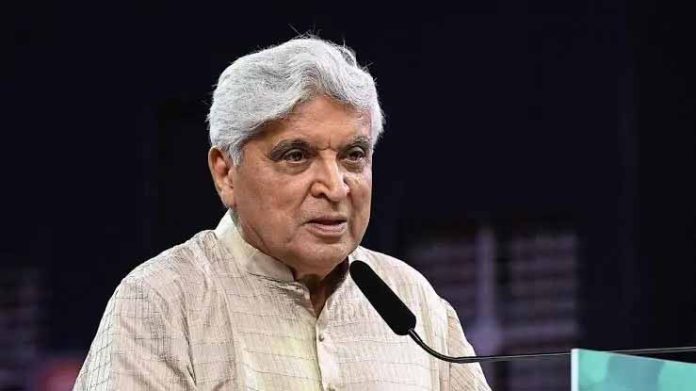
Veteran screenwriter and lyricist Javed Akhtar has robustly criticized the film regulatory bodies in India, stating that films reflecting societal realities often face undue censorship while those filled with vulgarity and regressive themes receive the green light. Akhtar made these remarks during the inaugural session of the Anantrang Mental Health Cultural Festival held on Friday in Mumbai, highlighting the audience’s pivotal role in shaping the success of films.
Akhtar expressed his dismay over the current film censorship landscape in India, pointing out that vulgar narratives often evade scrutiny. According to him, censorship allows films depicting misogyny and male chauvinism to thrive, missing an opportunity to address pressing societal issues. He stated, “In this country, vulgarity will still be passed by the film boards. They don’t realize that these are wrong values — a male chauvinistic view that humiliates women.” At the heart of his critique lies the belief that films which reflect societal struggles often face rejection.
Further elaborating, Akhtar stated, “A film is a window into society through which you peek. Closing the window will not fix what is happening outside.” His assertion resonates in light of the ongoing discourse about the responsibilities of both filmmakers and audiences in the cinematic landscape.
Impact of Hyper-Masculinity on Cinema
Akhtar also addressed the troubling trend of hyper-masculine portrayals in films, attributing their popularity to societal approval. He argued that films promoting unhealthy masculine stereotypes contribute to declining mental health among men. Akhtar stated, “It is because of the mental health of men that such films are being made. If men’s mental health improves, such films won’t be made – and even if they are, they won’t work.” This statement underlines the interconnectedness of societal values and cinematic content, reinforcing the idea that audiences play a crucial role in this dynamic.
Speaking figuratively, Akhtar remarked, “In show business, the audience is god. A bad audience makes a bad film successful.” This assertion encapsulates his belief that audiences must take responsibility for the values they promote through their viewing choices.
Concerns Over Vulgarity in Film Music
Akhtar expressed disappointment over the prevalence of vulgar and suggestive songs in the film industry. He noted that he has consistently rejected work that conflicts with his values, reflecting his dedication to meaningful artistry. He recounted, “During the 80s, many songs had double meanings, but I refused to write them.” His critique extends to the popularization of such songs, demonstrating how audience taste shapes industry trends. Referring to the controversial yet popular song ‘Choli Ke Peeche Kya Hai’, he remarked on society’s gradual descent into accepting declining moral values, asserting that, “If these are the values of society, what can you expect from films and songs? Society is responsible — cinema is only a manifestation.”
Positive Note with ‘Saiyaara’
Amidst his critiques, Akhtar praised the recent film ‘Saiyaara’, directed by Mohit Suri. He appreciated its music, dubbing it “refreshingly calm and soulful.” Akhtar commented, “The music of Saiyaara has a stillness, an old charm.” His accolades highlight that quality cinema still exists, even when overshadowed by more mainstream, formulaic productions.
On Art, Sadness, and Emotional Expression
Akhtar also shared his thoughts on the emotional complexities of music in films, particularly the role of sad songs. He philosophized, “It’s not good to deny sadness; otherwise, it will resurface elsewhere.” According to him, the absence of poignant melodies in contemporary films reflects a broader societal denial of sadness and discomfort in confronting real emotions. He urged audiences to embrace sadness, stating, “Accept it, cry if you must. That’s what keeps the mind healthy.”