

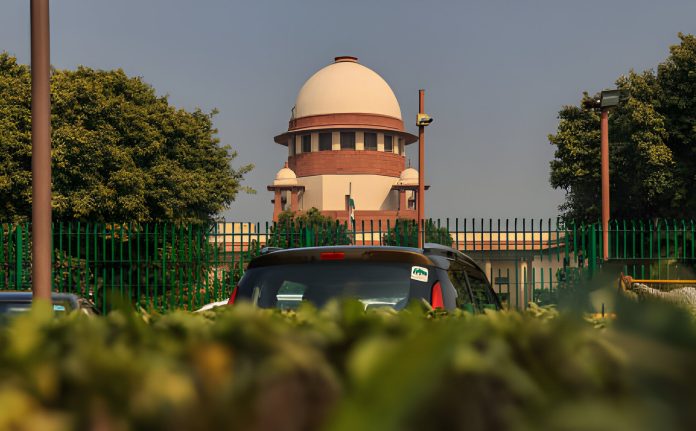
The Supreme Court of India on Thursday directed the Centre to respond to a Public Interest Litigation (PIL) addressing the urgent need to establish a revenue judicial service for land disputes. The bench, consisting of Chief Justice Surya Kant and Justice Joymalya Bagchi, issued a notice to the Union of India and the Law Commission concerning the petition filed by advocate Ashwini Upadhyay.
The PIL asserts that nearly 66 percent of civil cases in India relate to land disputes, which are often adjudicated by revenue officers lacking formal legal education. Upadhyay highlighted that the absence of minimum legal qualifications and a training module for these public servants leads to inconsistent and erroneous rulings.
Legal expert Ashwani Dubey, who drafted the petition, cited an older ruling from the Allahabad High Court, which discussed the same issue but saw little implementation. The PIL argues that this lapse results in widespread harm to citizens, as inexperienced officers continuously handle land-related cases.
Decisions made by non-qualified professionals frequently generate arbitrary outcomes, contributing to prolonged property disputes, increased legal costs, and hindered access to justice. This situation raises significant concerns under Articles 14 and 21 of the Indian Constitution, which guarantee equality before the law and the right to life and personal liberty.
The petition seeks directives from the Supreme Court for both the Centre and state governments, urging them to establish a minimum legal qualification and judicial training framework. This would ensure that revenue officers involved in adjudicating matters related to title, succession, inheritance, and possession of land possess appropriate legal training.
Moreover, the petition calls for a declaration asserting that any adjudication of property rights by officials without adequate legal education is legally impermissible. It emphasizes that the oversight of such adjudications should fall under the jurisdiction of the respective High Courts.
Upadhyay expressed hopes that the Supreme Court’s notice would compel the government to act decisively on this pressing issue, providing a structured approach to resolving land disputes. With ongoing concerns regarding bureaucratic inefficiencies and improperly adjudicated land rights, many citizens remain highly dependent on legal resolutions for clarity and security in property matters.
As the Supreme Court continues to deliberate on this matter, the establishment of a revenue judicial service remains a crucial step toward ensuring effective and equitable adjudication in land disputes, a challenge that has long restricted citizens’ rights and hampered judicial access.