

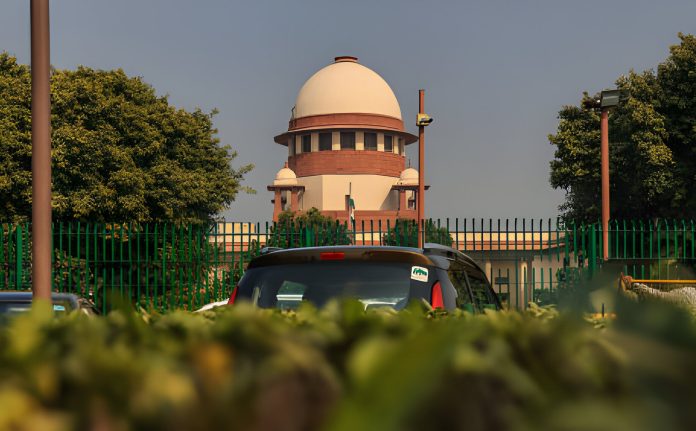
The Supreme Court of India on Wednesday referred the significant issue of whether litigants can directly request anticipatory bail from high courts or must first approach sessions courts. A bench comprised of Justices Vikram Nath and Sandeep Mehta indicated that this matter requires consideration by a larger judicial forum and should be listed before a three-judge bench once constituted.
In a previous engagement with the case, the apex court appointed senior advocate Siddharth Luthra as amicus curiae to assist in examining the complexities of anticipatory bail applications. This decision comes in light of growing concerns about varying practices of anticipatory bail across different Indian states.
The Kerala HC Practice Under Scrutiny
On September 8, the Supreme Court expressed uneasiness regarding the prevalent custom of the Kerala High Court handling anticipatory bail requests directly. “One issue that is bothering us is that in the Kerala High Court, anticipatory bail applications are regularly entertained directly. Why is that so?” the bench queried.
Examining the legal framework established in both the traditional Code of Criminal Procedure and the new Bharatiya Nagarik Suraksha Sanhita (BNSS), 2023, the court highlighted the established hierarchical process for requesting bail. In particular, they noted Section 482 of the BNSS, which outlines provisions for granting bail to individuals fearing arrest.
The bench observed, “It doesn’t happen in any other state. Only in the Kerala High Court… applications for anticipatory bail are regularly entertained directly.” This unique practice indicates a potential departure from established legal protocols.
Case That Triggered the Discussion
The scrutiny by the Supreme Court stemmed from a plea submitted by two individuals who contested a Kerala High Court ruling that denied them anticipatory bail. These petitioners opted to approach the high court directly, bypassing the sessions court entirely, thus raising legal questions.
The Supreme Court remarked that this direct approach could deprive the judiciary of essential factual records that are typically presented before a sessions court. “We are inclined to consider whether the option to approach the high court is a matter of choice for the accused or whether it should be mandatory to first go to the sessions court,” the bench commented.
As the discourse unfolds, the top court has issued notice to the Kerala High Court, calling for a response via its Registrar General on the matter, which intensifies the scrutiny on anticipatory bail practices.
This development reflects the need for an in-depth evaluation of the anticipatory bail process across India, especially considering the variations present in state-specific approaches. The Supreme Court aims to create a framework that ensures a balanced approach towards anticipatory bail applications and upholds the integrity of judicial processes.
Anticipatory bail plays a crucial role in safeguarding individual rights against arbitrary arrests. Legal experts anticipate that the Supreme Court’s deliberation will clarify the procedural norms and potentially standardize practices across states.